Tree leaning toward the house: when it is dangerous
A tree leaning toward your house is dangerous mainly when the lean is new or getting worse, or when the soil is lifting or cracking on the side away from the lean. Those signs usually mean the roots are failing, and a tree in that state can come down without further warning. A tree that has grown at the same angle for years, with a straightened top and firm ground at its base, is often stable and just needs watching. Either way, a tree that could reach the house deserves a look from a certified arborist.
You can do the first check yourself, from a distance and without touching anything. The rest is a job for a professional.
Is the lean new or old?
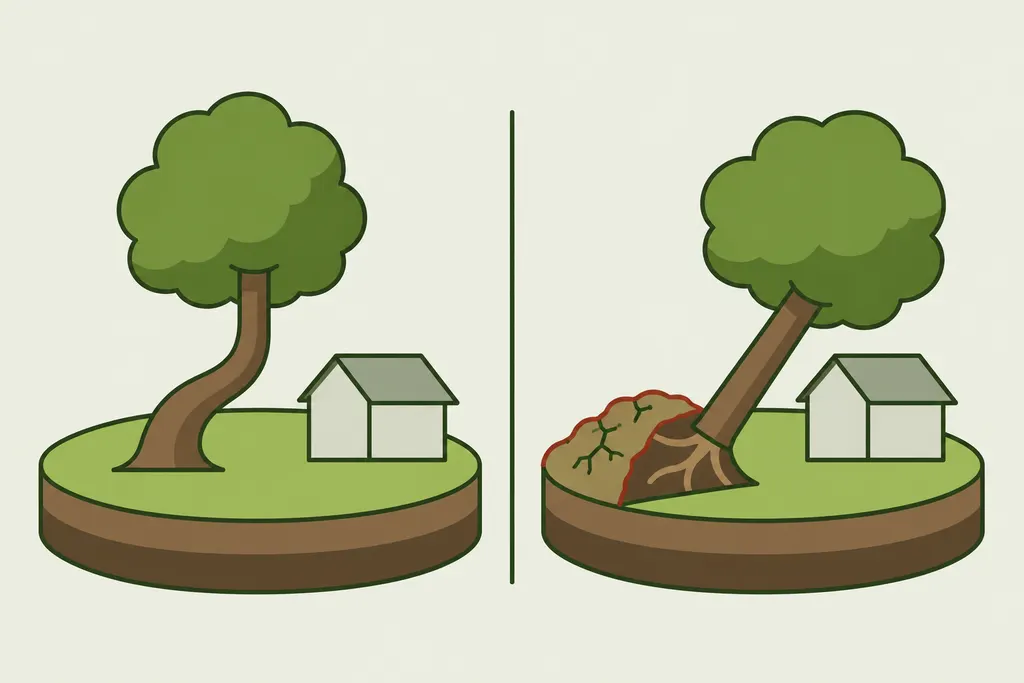
Many trees lean. They grow toward light, away from a neighboring tree, or against a prevailing wind. Penn State Extension describes the clue to look for: a tree that leaned long ago builds wood year by year to carry the angle and bends its upper trunk back toward vertical, a curve called a sweep, and sweeps are often structurally sound. A trunk that is straight from the ground up and tilted as a whole usually moved in a single event, such as a storm.
Compare old photos of the yard if you have them. Look at the tree after every major storm or long soaking rain, which is when root plates most often shift.
Warning signs to look for from a safe distance
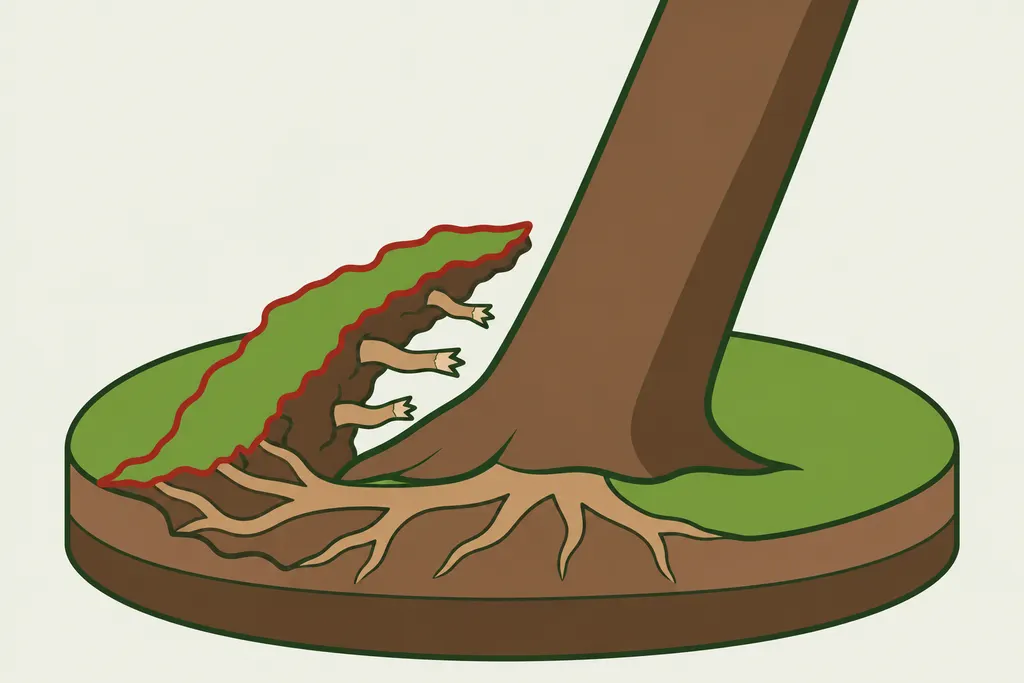
- Heaving soil on the back side. A raised ridge or cracked turf on the side away from the lean means the root plate is lifting. The New York State DEC says this most likely means the roots have already failed, and it notes that root failure in an established tree cannot be repaired.
- Snapped or freshly exposed roots near the base.
- A gap between the trunk and the soil on the side the tree is leaning away from.
- Cracks, splits or hollows in the trunk, especially near the base or where large limbs meet.
- Mushrooms or shelf fungus at the base or on the roots, a sign of decay inside.
- A target in reach. A house, driveway, play area or power line within the tree’s height.
If you see the first two, keep people and cars out of the area the tree could hit and call a certified arborist or tree service right away.
Who should assess it
A certified arborist can judge root health, decay and the load on the tree, and some hold a separate tree risk assessment qualification. The New York State DEC’s guidance on urban tree risk looks at the same three things an arborist will: the defects in the tree, how likely it is to fail, and what it would hit. An assessment often costs less than a removal and can save you from removing a sound tree.
When you call, tell them which way the tree leans, how close the house is, and whether the lean is new.
Options: monitor, reduce, support or remove
- Monitor. For an old, stable lean with no warning signs, check after storms and have it looked at every few years.
- Reduce weight. Pruning to lighten the leaning side can lower the load on the roots. This is careful, skilled work and should follow proper pruning standards, not topping.
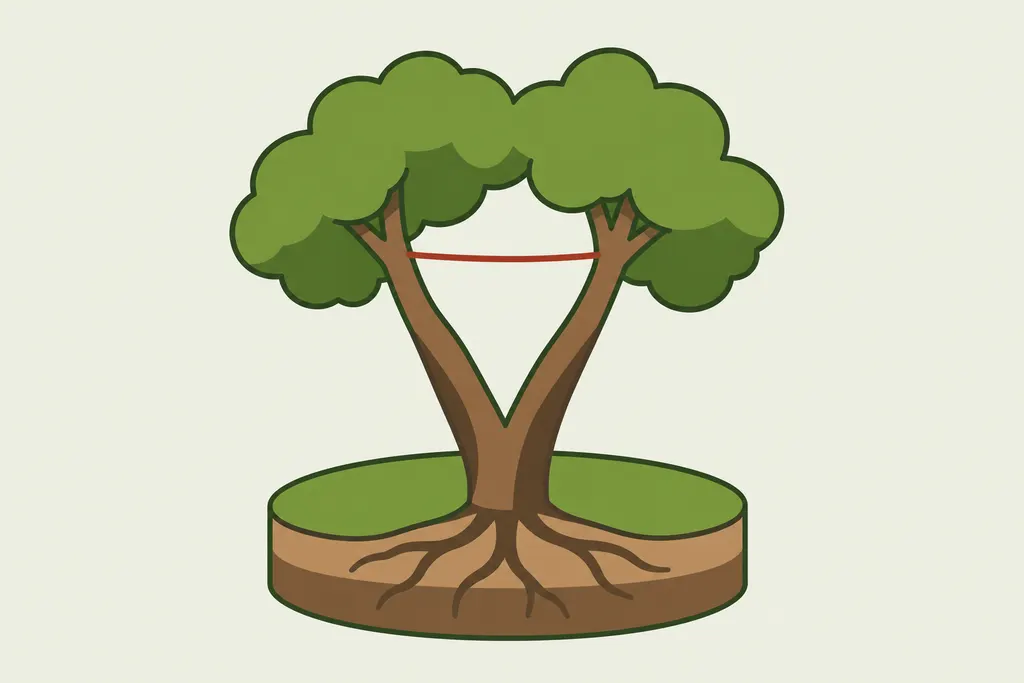
- Cable or brace. Steel cables between major stems can support a weak fork. They do not fix a failing root plate.
- Remove. When the roots are failing or the trunk is badly decayed, removal is usually the safe answer. Mature trees cannot be pulled back upright.
What removal near a house costs
A tree that leans toward a house cannot simply be dropped. The crew takes it down in small pieces lowered on ropes, sometimes with a crane. Bob Vila puts the effect of location and access on price at 25 to 50 percent, and LawnStarter says a hard-to-reach tree can add up to 50%. On a 30–60 ft tree that normally costs about $450–$1,200, expect roughly $560–$1,800 before stump work and hauling.
Use the estimator’s “leans toward a building” and “over the roof” settings to see the effect on your own tree.
Questions for the arborist
- Is the lean old and stable, or has the tree moved?
- Are the roots and the soil around them sound?
- Is there decay in the trunk or root flare?
- Would pruning or cabling make it safe enough, and for how long?
- If removal is needed, how will the house and roof be protected?
- Can you send a certificate of insurance for liability and workers’ compensation?
Common questions
How much lean is too much?
There is no safe angle on its own. A tree at 20 degrees that grew that way can be stable, while a tree that shifted 5 degrees in a storm can be close to failing. The change and the root signs matter more than the angle.
Can a leaning tree be straightened?
Young trees can sometimes be staked upright. Mature trees cannot be pulled back without damaging the roots; reducing weight or removing the tree are the realistic choices.
Will insurance pay to remove a leaning tree?
Not before it falls. Insurance pays for damage from covered events, not prevention. Acting on a clearly failing tree also protects you from a claim being challenged later.
Is it the neighbor’s job if their tree leans over my house?
Talk to them first and put your concern in writing. See tree on the property line for how responsibility usually works.
Read next
- Safety & tree health Dead tree: signs it is dying and what removal costs How to tell whether a tree is dead, dying or only dormant, why dead trees are riskier to take down, what removal costs, and when it can wait.
- Storm & emergency Emergency tree removal after a storm: cost and first steps Why storm and emergency tree work costs more, what to do before you call anyone, which jobs can wait, and how to spot storm-chaser crews.
- Costs & pricing Tree removal cost: what you'll pay by height, type and job What tree services charge to cut down and haul away a tree: prices by height, species and state, the extras that change a quote, and how to compare two bids.
- Costs & pricing Tree trimming cost What pruning and trimming a tree costs by height and species, how crews price the work, and what a good trimming quote should spell out.
Sources (5)
- Penn State Extension What to do about leaning trees extension.psu.edu (opens in a new tab)
- New York State DEC Managing risk in urban trees dec.ny.gov (opens in a new tab)
- Bob Vila How much does it cost to remove a tree updated Jul 27, 2023 bobvila.com (opens in a new tab)
- LawnStarter Tree removal cost updated Oct 5, 2026 lawnstarter.com (opens in a new tab)
- NC State Extension How to Hire a Tree Care Professional (AG-691) content.ces.ncsu.edu (opens in a new tab)
About the pictures on this page: they are AI-made diagrams drawn to explain tree work, not photographs of a real yard, tree, crew or job.