Emergency tree removal after a storm: cost and first steps
Emergency tree removal typically costs two to three times a regular removal, according to both Fixr and a pricing guide written for tree businesses. For a 30–60 ft tree that usually costs about $450–$1,200 on a normal booking, an emergency call can mean roughly $900–$3,600. Fixr’s emergency range runs from $450 to $5,000, and Lawn Love lists $450–$3,000. A tree on a roof, a crane, or work at night pushes toward the top of those ranges.
The premium is real, but you do not always have to pay it. A fallen tree lying in the yard is a mess, not an emergency. The first job after a storm is to sort out which is which, calmly and from a safe distance.
Why emergency work costs more
Storm work is slower and riskier than a planned removal. Trees that have snapped or partly uprooted carry tension in the wood and can shift as they are cut. Crews may work around damaged roofs, broken limbs caught in other trees, and lines that may or may not be live. They also work long days after a storm, often with equipment brought in from elsewhere. Those costs land in the rate.
| Tree height | Regular typical price | × 2 | × 2.5 | × 3 |
|---|---|---|---|---|
| Up to 30 ft | $310 | $630 | $780 | $940 |
| 30 to 60 ft | $830 | $1,650 | $2,060 | $2,480 |
| 60 to 80 ft | $1,150 | $2,300 | $2,880 | $3,450 |
| Over 80 ft | $1,540 | $3,080 | $3,850 | $4,620 |
Sources: Fixr, Housecall Pro, Today's Homeowner, This Old House, Lawn Love, Bob Vila, HomeGuide, Angi / HomeAdvisor.
Today’s Homeowner frames the premium as $500 to $3,000 added to a standard price. Either way, a regular booking a few days later is usually the less expensive path when nothing is at risk.
Safety first: wires and hanging limbs
Before calling any tree company, look at the scene from a distance.
- Assume every downed wire is live. Never approach a tree that may be touching a power line. Keep children and pets inside, and call your electric utility. If a wire sparks or smokes, call 911.
- Look up. Broken limbs caught in the crown can drop without warning. Stay out from under any tree that lost large branches.
- Stay out of damaged rooms. If a tree came through the roof, leave that part of the house until someone qualified has looked at it.
- Do not start cutting. Storm-damaged trees are some of the most dangerous wood to cut. This is work for an insured crew with the right equipment.
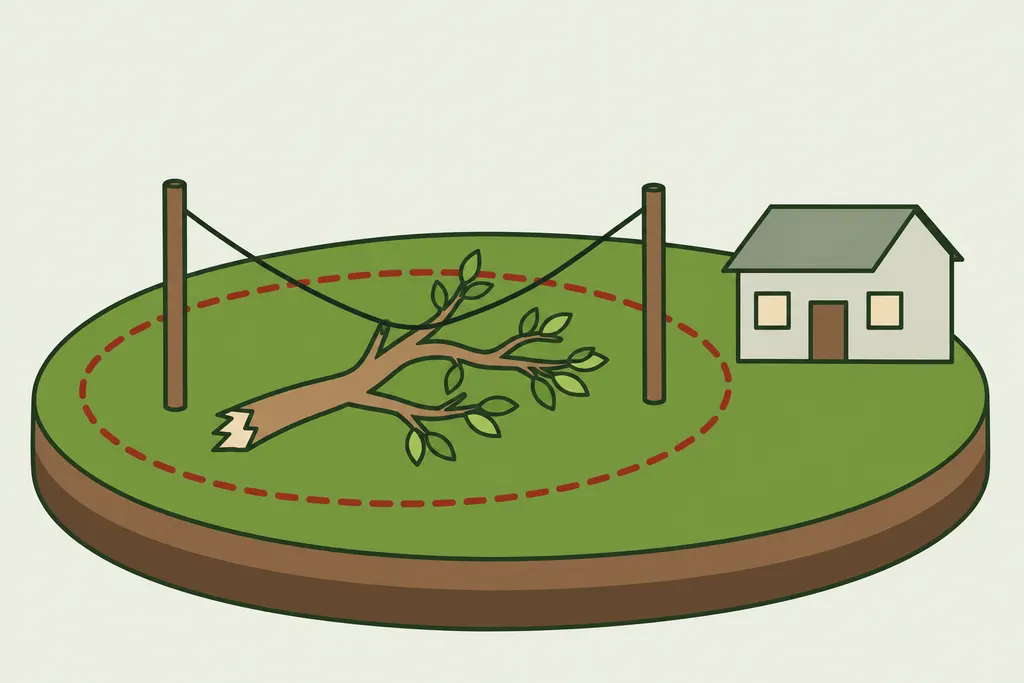
Utilities usually deal with trees on their own lines. In Ohio, for example, the utility may trim on private property within its easement, and the Ohio Consumers’ Counsel notes that homeowners may have to arrange removal of the debris themselves.
Can it wait for a regular slot?
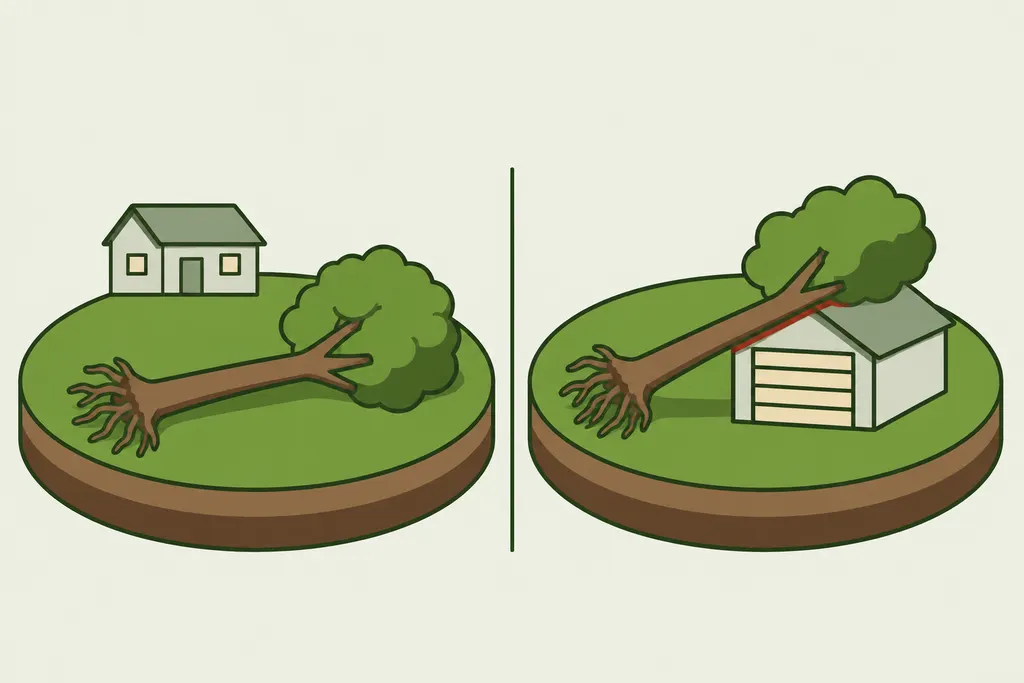
As a rule of thumb, it is a true emergency when a tree is on a building, blocking the only way in or out, touching a power line, or hanging where it could fall on people or a house. A trunk lying across the lawn, a broken limb on the grass, or a fallen tree at the back of the lot can usually wait for a quote at the normal rate. Take photos either way.
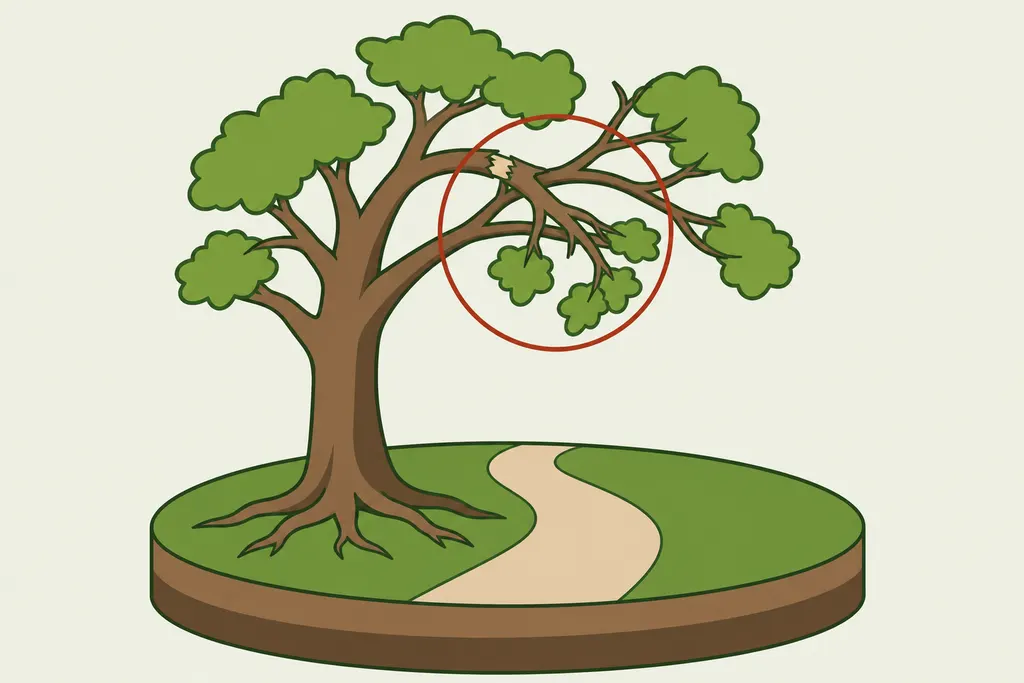
Hanging limbs are the tricky middle case. A large branch caught high in a tree can fall at any moment. If one hangs over a path, a driveway or the house, treat it as urgent and keep people away until a crew removes it.
Photos and notes for your insurer
If the tree damaged your house, garage or fence, your insurer will want to see the damage before it is cleaned up. From a safe spot:
- Photograph the tree where it landed, from several angles, before anything is moved.
- Photograph damage to the roof, siding, gutters, fences and any vehicles.
- Note the date and time and the weather that caused it.
- Call your insurer to open a claim before agreeing to non-urgent work.
- Keep every receipt, including for emergency tarping or temporary repairs.
- Ask the tree service for an itemized invoice that separates removal from cleanup.
Our insurance guide explains what policies usually cover and the common limits on tree removal.
Storm-chaser warning signs
Every big storm brings out crews that knock on doors and disappear with deposits. The attorneys general of Tennessee and South Carolina issued tree-scam warnings after winter storms in early 2026, and Georgia’s consumer protection office keeps a standing page on storm fraud. Their warning signs overlap:
- Door-to-door offers, especially from out-of-state crews or trucks with no company name.
- Demands for full or large payment up front, or cash only.
- No written contract, or pressure to sign on the spot.
- Offers to “cover” your insurance deductible.
- No proof of liability and workers’ compensation insurance.
NC State Extension’s hiring guide adds a simple rule: never pay in advance, and do not let anyone rush you with a bargain.
What to ask before work starts
- Can you send a certificate of insurance straight from your insurer?
- Is an ISA Certified Arborist on the crew or overseeing the job?
- What exactly is included: cutting, removal from the structure, hauling, stump?
- Will you tarp or protect the roof opening once the tree is off?
- Is the price written as one total? If billed by the hour, what is the cap?
- Can I pay when the work is done?
Common questions
How much does it cost to remove a fallen tree?
Less than a standing tree in many cases, because nobody has to climb or lower pieces. Fixr lists fallen-tree removal at $75–$150 and Lawn Love at $90–$300, though storm conditions and a tree resting on a building raise the price sharply.
Who pays when a tree falls on power lines?
The utility usually deals with its own lines and often the tree touching them. You may still pay to remove the rest of the tree and the debris on your property.
Will my insurance cover emergency tree removal?
Often yes when a covered storm drops a tree onto a covered structure, usually with a cap on the removal part. A tree that falls without hitting anything is usually your cost.
Should I let a crew start if they show up right after the storm?
Only after you have checked their insurance, have a written price, and have spoken with your insurer if a claim is involved. A legitimate company will wait for that.
Can I book a regular slot even after a storm?
Yes, if nothing is on a building, blocking access or touching a line. Crews work through the backlog over the following days or weeks, and a booked visit is normally priced at the regular rate.
Read next
- Storm & emergency A tree fell on your house: what to do first The calm, ordered steps after a tree hits a house: safety, who to call, documenting damage for insurance, getting the tree off the roof, and what it usually costs.
- Permits, insurance & neighbors Does homeowners insurance cover tree removal? When a homeowners policy pays to remove a fallen tree, the usual limits, when you pay yourself, what happens with a neighbor's tree, and how to file.
- Safety & tree health Tree leaning toward the house: when it is dangerous How to tell a long-standing lean from a dangerous new one, the warning signs to look for from a distance, who should assess it, and what removal near a house costs.
Sources (9)
- Fixr Tree removal cost: emergency removal updated Jan 31, 2025 fixr.com (opens in a new tab)
- Housecall Pro Tree trimming and removal pricing guide updated Aug 21, 2026 housecallpro.com (opens in a new tab)
- Today's Homeowner Tree removal cost updated Sep 3, 2025 todayshomeowner.com (opens in a new tab)
- Lawn Love Tree removal cost updated Oct 5, 2026 lawnlove.com (opens in a new tab)
- Office of the Ohio Consumers' Counsel Utility line clearing and tree trimming occ.ohio.gov (opens in a new tab)
- Tennessee Attorney General Consumer alert: tree trimming and removal scams Feb 2026 tn.gov (opens in a new tab)
- Georgia Consumer Protection Division Storms and fraud consumer.georgia.gov (opens in a new tab)
- South Carolina Attorney General Tips for downed trees and limbs Jan 2026 scag.gov (opens in a new tab)
- NC State Extension How to Hire a Tree Care Professional (AG-691) content.ces.ncsu.edu (opens in a new tab)
About the pictures on this page: they are AI-made diagrams drawn to explain tree work, not photographs of a real yard, tree, crew or job.