A tree fell on your house: what to do first
If a tree falls on your house, get everyone out of the damaged area, stay away from any wires, and call 911 if anyone is hurt, you smell gas, or a line is sparking. Then call your electric utility if lines are involved, call your home insurer to open a claim, photograph the damage from a safe spot, and hire an insured tree service to lift the tree off. Removing a tree from a roof usually costs more than a normal removal, often with a crane, and emergency rates of two to three times the usual price are common.
This page walks through those steps in order. Once everyone is safe, take them one at a time: a few careful minutes rarely change the outcome for the house, and rushing near a fallen tree is how people get hurt.
1. Get everyone out and away
- Leave rooms under or next to the damage. Ceilings and walls that took a hit can be weaker than they look.
- If the tree brought down wires, stay far away from the tree and everything it touches, including fences and puddles.
- If you smell gas, leave the house and call 911 or your gas utility from outside.
- Keep children and pets indoors on the undamaged side, or with a neighbor.
Do not climb onto the roof, and do not try to cut or move the tree. A tree resting on a house is loaded in ways that are hard to read; cutting the wrong piece can drop it further into the structure.
2. Make the calls, in order
- 911 for injuries, gas smells, fire, or a wire that is sparking or smoking.
- Your electric utility if any line is down or touched. Utilities handle their own lines; the Ohio Consumers’ Counsel tells residents never to approach a fallen tree that may be in contact with an electric line.
- Your home insurer, to open a claim and learn what they need before work starts.
- An insured tree service with storm and crane experience.
3. Document the damage
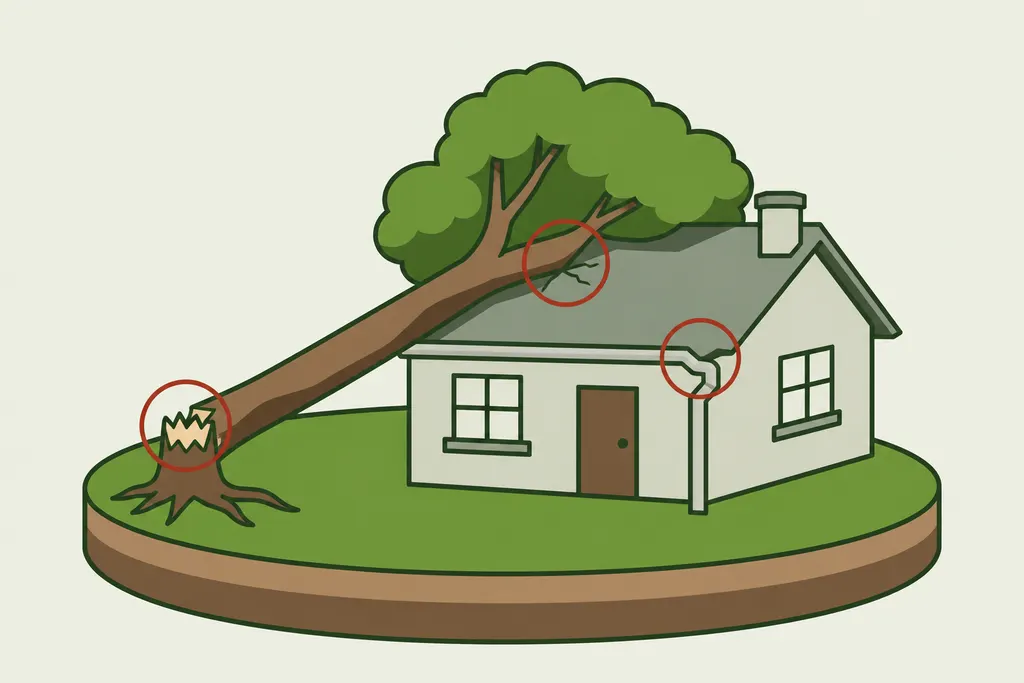
Insurers want to see the scene before it changes. From the ground and from inside safe rooms:
- Wide photos of the tree on the house from each side you can safely reach.
- Close photos of the roof, gutters, siding, windows and any interior ceiling damage.
- Photos of the stump or break point, which can show whether the tree was healthy.
- Photos of other damage: fences, cars, sheds.
- A short note of the date, time and weather.
- Receipts for any emergency tarping, board-up or hotel stays.
4. Getting the tree off the roof
This is a job for professionals. The crew will usually take weight off the house in sections, lifting pieces away rather than letting them drop. For larger trees, or a trunk lying across the ridge, a crane is often the safest way to do it. Fixr lists crane-assisted removal at $1,500–$2,500 for the whole job; emergency rates on top of that are common.
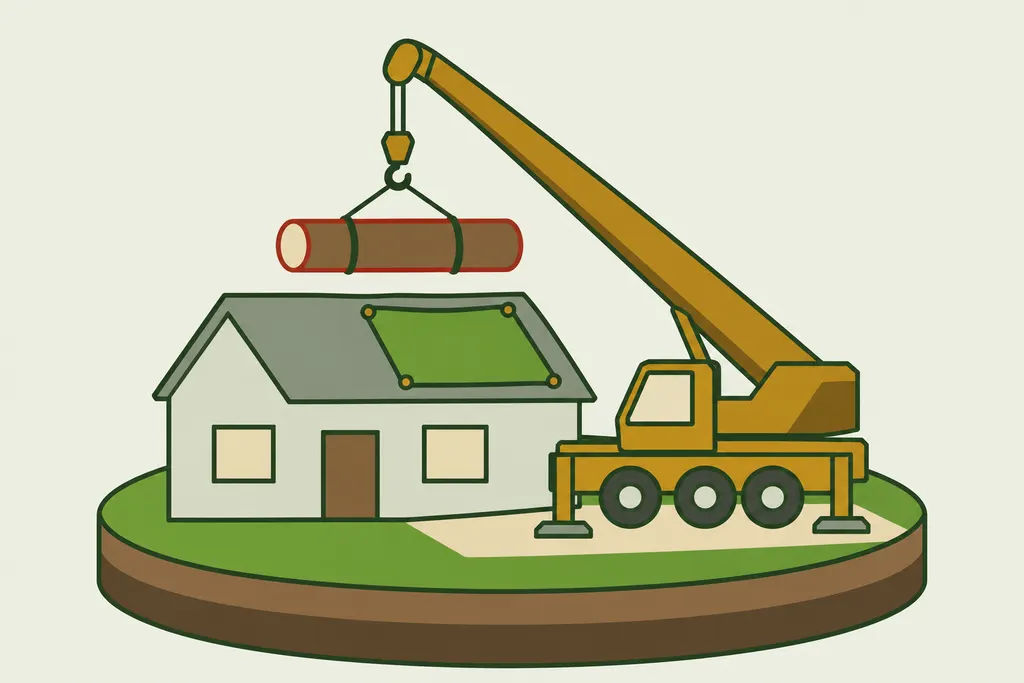
Once the tree is off, the opening needs to be covered right away to keep rain out. Some tree services will tarp the roof; others leave that to a roofer. Ask before they start.
What it usually costs
There is no single price, but the pieces are predictable:
- Tree removal: a normal 30–60 ft removal runs about $450–$1,200; storm conditions often double or triple that.
- Crane: about $1,500–$2,500 for a crane-assisted job (Fixr).
- Hauling and cleanup: about $75–$150 per load, the middle of the hauling figures cost guides publish.
- Roof tarping and repairs: quoted separately by a roofer or contractor.
Run the numbers for your situation with the estimator’s roof, crane and emergency settings.
Insurance basics
When wind, lightning or ice drops a tree onto a covered structure, homeowners insurance generally pays to repair the structure and to remove the tree from it, minus your deductible. Removal of the tree itself is usually capped; the Insurance Information Institute puts typical coverage at about $500 to $1,000, and some newer policy forms allow more. If the tree came from a neighbor’s yard, you still normally claim on your own policy. Our insurance guide covers the exceptions.
Choosing a crew in a hurry
Storms bring out unlicensed crews looking for quick cash. Georgia’s consumer protection office warns against contractors who want full payment up front, take only cash, or will not put the deal in writing.
- Insurance certificate for liability and workers’ compensation, sent by the insurer.
- A written price that says what is included.
- Payment when the work is done.
- A local address and phone number you can verify.
Common questions
Is it safe to stay in the house?
It depends on the damage. If the tree broke through the roof or a wall, or ceilings are sagging, stay out of those areas and consider staying elsewhere until a contractor has checked the structure.
Who pays if my neighbor’s tree fell on my house?
Usually your own insurer pays for your damage. If the tree was obviously dead or neglected, your insurer may try to recover the cost from your neighbor.
Should I remove the tree before the adjuster comes?
Only if leaving it would cause more damage or danger. Take thorough photos first, keep the receipts, and tell your insurer what you did and why.
How fast can a crew get the tree off?
After a big storm, crews are booked up, and many put trees on occupied houses ahead of yard cleanups. Ask for an estimated date in writing.
Read next
- Storm & emergency Emergency tree removal after a storm: cost and first steps Why storm and emergency tree work costs more, what to do before you call anyone, which jobs can wait, and how to spot storm-chaser crews.
- Permits, insurance & neighbors Does homeowners insurance cover tree removal? When a homeowners policy pays to remove a fallen tree, the usual limits, when you pay yourself, what happens with a neighbor's tree, and how to file.
- Costs & pricing Large tree and crane removal cost What removing a very tall or boxed-in tree costs, when crews bring in a crane, crane-job price ranges, and big species such as oak and pine.
Sources (7)
- Insurance Information Institute I.I.I. provides information on insurance for fallen trees (press release) prnewswire.com (opens in a new tab)
- Travelers What if? Frequently asked questions about fallen trees travelers.com (opens in a new tab)
- Office of the Ohio Consumers' Counsel Utility line clearing and tree trimming occ.ohio.gov (opens in a new tab)
- Fixr Tree removal cost updated Jan 31, 2025 fixr.com (opens in a new tab)
- Housecall Pro Tree trimming and removal pricing guide updated Aug 21, 2026 housecallpro.com (opens in a new tab)
- Georgia Consumer Protection Division Storms and fraud consumer.georgia.gov (opens in a new tab)
- NC State Extension How to Hire a Tree Care Professional (AG-691) content.ces.ncsu.edu (opens in a new tab)
About the pictures on this page: they are AI-made diagrams drawn to explain tree work, not photographs of a real yard, tree, crew or job.