Tree trimming cost
Trimming one tree typically costs about $255 to $700, the middle of five published price guides. Height matters most: HomeGuide puts trees up to 30 ft at $250–$700, trees 30–60 ft at $600–$1,200, and trees over 60 ft at $1,000–$2,500 or more. Small ornamental trees can cost under $100, while HomeGuide’s range for oaks reaches $1,500, before any extra for limbs over a roof.
Trimming usually costs less than removal, but not always by much on a large tree. If you are deciding between the two, price both with the same height.
Trimming cost by height
Taller trees need more climbing or bucket-truck time and more rigging to lower cut branches safely, so the price climbs quickly with height.
| Tree height | Low | High |
|---|---|---|
| Up to 30 ft | $250 | $700 |
| 30 to 60 ft | $600 | $1,200 |
| Over 60 ft | $1,000 | $2,500 |
Sources: HomeGuide.
HomeGuide is the only guide we found that splits trimming by height. The other guides publish one typical range per tree.
| Guide | Low | High | What it covers |
|---|---|---|---|
| HomeGuide | $400 | $900 | Typical range $400–$900, average $650 |
| Lawn Love | $255 | $655 | Tree trimming $255–$655, average $420 |
| LawnStarter | $315 | $700 | Trimming $315–$700 |
| Today's Homeowner | $250 | $700 | Trimming or limb removal $250–$700 |
| Bob Vila | $200 | $760 | Trimming $200–$760 |
Sources: HomeGuide, Lawn Love, LawnStarter, Today's Homeowner, Bob Vila.
Trimming cost by species
Species prices mostly reflect how big and dense a tree grows. Crepe myrtles stay small; oaks and pines can get very large.
| Tree | Low | High |
|---|---|---|
| Crepe myrtle | $80 | $400 |
| Cypress | $150 | $1,200 |
| Maple | $400 | $1,000 |
| Oak | $450 | $1,500 |
| Palm | $100 | $900 |
| Pine | $250 | $1,600 |
Sources: HomeGuide.
Palm trimming is its own job. Crews remove dead fronds and seed pods instead of thinning branches. Housecall Pro’s guide for tree businesses lists palm trimming at $125–$800, and HomeGuide lists palms at $100–$900.
What changes the price
- Height and spread. The single largest factor, as the tables show.
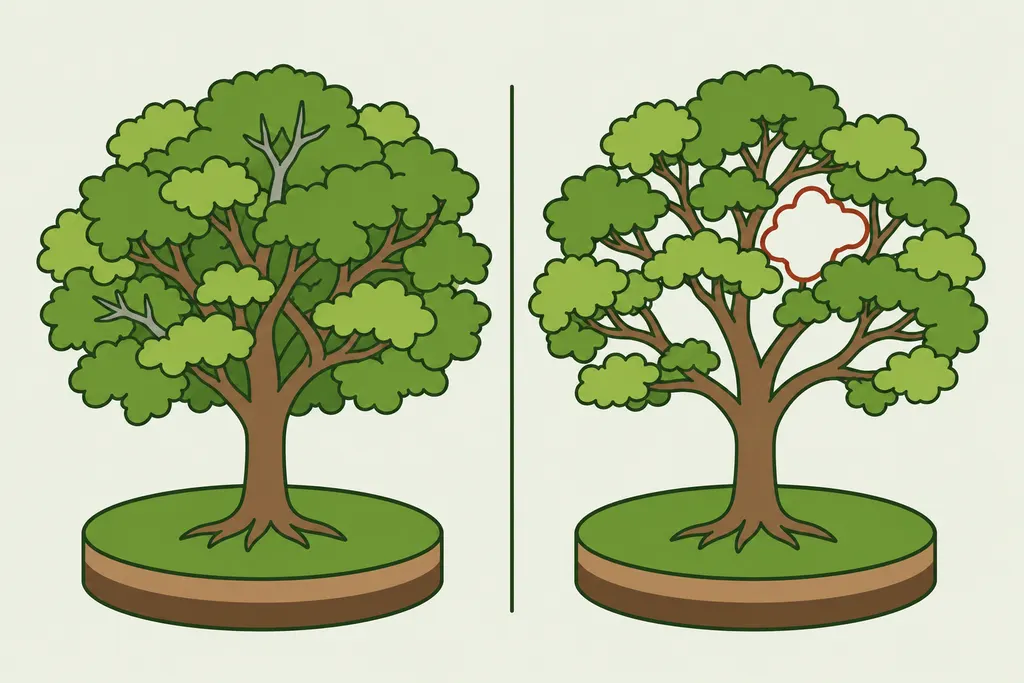
- What kind of pruning. Removing a few dead limbs is quicker than thinning a whole crown or raising it over a driveway.
- Access. A bucket truck in the driveway is fast. A backyard tree behind a fence may need a climber and hand-carrying of every branch.
- Nearby targets. Limbs over a roof, a pool or power lines must be lowered on ropes rather than dropped.
- Cleanup. Ask whether chipping and hauling of the brush are included.
- How many trees. Crews often price a better rate per tree when they can do several in one visit.
Trimming vs. topping
Topping means cutting the main stems back to stubs to shrink a tree. The national pruning standard, ANSI A300 Part 1, calls it an unacceptable practice, as University of Tennessee Extension’s summary of the standard notes. It is cheap at first and expensive later: Penn State Extension explains that the regrowth is weakly attached and breaks easily, the stubs let rot in, and the tree has to be cut back again every few years. A properly done crown reduction cuts back to healthy side branches and keeps the tree’s natural shape.
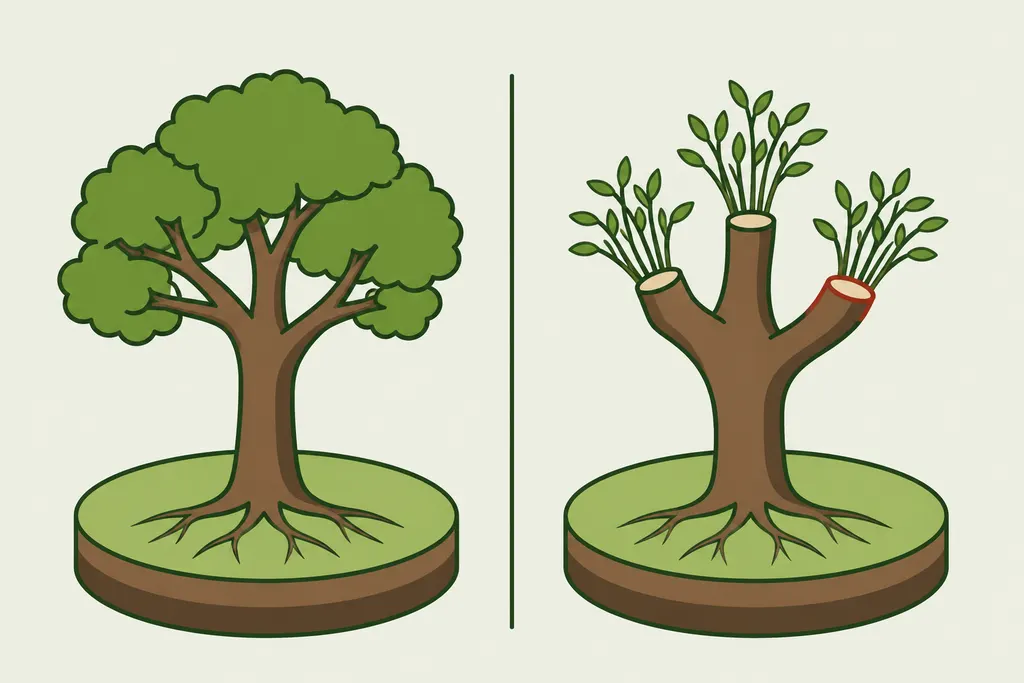
If a company offers to “top” a tree to make it safer, get a second opinion from a certified arborist. A tree that truly needs to be much smaller may be a candidate for removal instead.
Branches near power lines and roofs
Branches touching or growing toward a power line are not a homeowner job, and usually not a regular tree service job either. In Ohio, for example, the electric utility or its contractor may trim trees near its lines, including on private property, and the homeowner may have to arrange removal of the debris. Call your utility before you pay anyone to trim near a line.
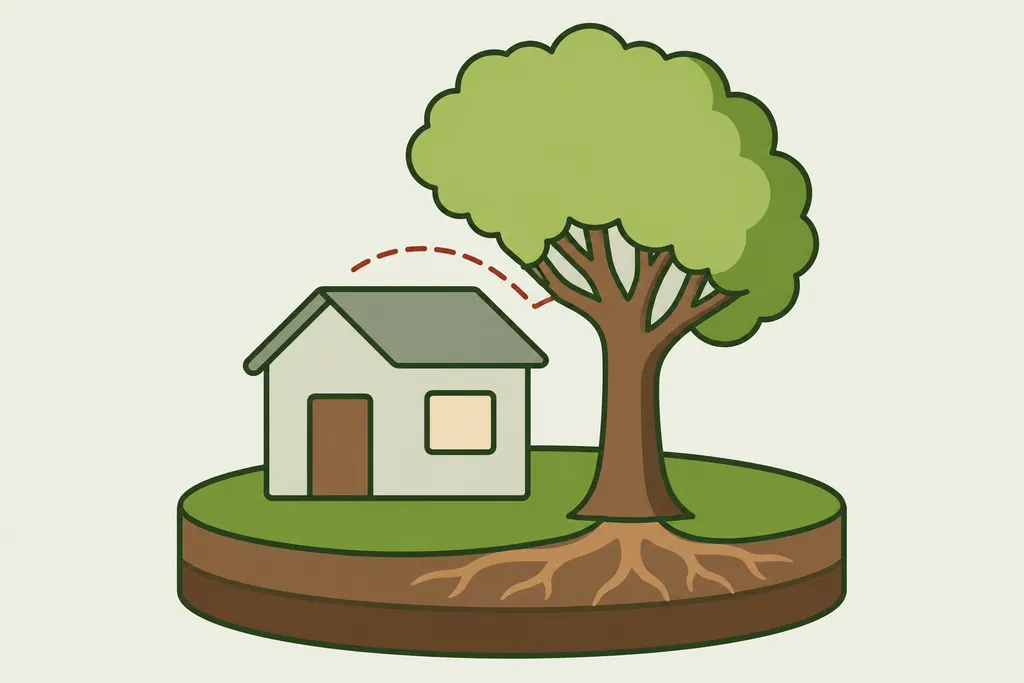
Branches over a roof should be cut back to leave a clear gap, which keeps leaves out of gutters and stops limbs from scraping shingles in the wind.
What a good trimming quote spells out
NC State Extension recommends getting the work described in writing, down to which trees and which branches. Use this list when you compare quotes.
- Which trees, and what will be cut on each (deadwood, thinning, clearance, reduction).
- A statement that the work follows ANSI A300 pruning standards, with no topping.
- Whether brush is chipped and hauled away, or left.
- A certificate of insurance for liability and workers’ compensation, sent by the insurer.
- One total price, or an hourly rate with a cap.
- Start and finish dates.
Signs a tree needs trimming now
- Dead or broken branches hanging over the roof, driveway, or a path.
- Branches rubbing the roof or siding, or within reach of a power line.
- A crown so dense that wind cannot pass through it.
- Limbs blocking sightlines at a driveway or street corner.
- Branches growing back toward the house after a past cut.
How often to trim
There is no single schedule. Many arborists suggest having mature shade trees looked over every few years, with deadwood removed sooner if a branch could fall on something. Young trees benefit from light structural pruning while they grow. Fruit trees and some ornamentals have their own schedules, so ask an arborist about yours.
Common questions
How much does it cost to trim a tree per hour?
Many crews charge a flat price per tree, but some bill by the hour. Ask for the crew size and an estimate of hours, and get a written cap so the total cannot drift.
Is late winter a good time to trim?
For many deciduous trees, yes. The branches are bare, the tree is dormant, and crews are less busy. Some species, and trees with certain diseases, have specific timing rules, so ask an arborist.
Can trimming save a tree I was going to remove?
Sometimes. Removing dead or crossing limbs, or reducing weight on one side, can make a tree safer. An arborist can tell you whether pruning is enough or whether the tree has defects that pruning will not fix.
Should I trim my neighbor’s branches that hang over my yard?
In most states you may trim back to the property line, without harming the tree. Talk to your neighbor first. Our property line guide covers the usual rules.
Read next
- Costs & pricing Tree removal cost: what you'll pay by height, type and job What tree services charge to cut down and haul away a tree: prices by height, species and state, the extras that change a quote, and how to compare two bids.
- Safety & tree health Tree leaning toward the house: when it is dangerous How to tell a long-standing lean from a dangerous new one, the warning signs to look for from a distance, who should assess it, and what removal near a house costs.
- Costs & pricing Palm tree removal cost What palm removal costs by height and source, why guides disagree on palms, what happens to the root ball, and when trimming is enough.
Sources (10)
- HomeGuide Tree trimming cost 2026 homeguide.com (opens in a new tab)
- Lawn Love Tree removal cost: trimming figures updated Oct 5, 2026 lawnlove.com (opens in a new tab)
- LawnStarter Tree removal cost: trimming figures updated Oct 5, 2026 lawnstarter.com (opens in a new tab)
- Today's Homeowner Tree removal cost updated Sep 3, 2025 todayshomeowner.com (opens in a new tab)
- Bob Vila How much does it cost to remove a tree updated Jul 27, 2023 bobvila.com (opens in a new tab)
- Housecall Pro Tree trimming and removal pricing guide updated Aug 21, 2026 housecallpro.com (opens in a new tab)
- NC State Extension How to Hire a Tree Care Professional (AG-691) content.ces.ncsu.edu (opens in a new tab)
- UT Extension (Knox County) Pruning trees and woody plants: ANSI A300 (Part 1) 2017 summary (PDF) knox.tennessee.edu (opens in a new tab)
- Penn State Extension Tree topping: the cost is greater than you think extension.psu.edu (opens in a new tab)
- Office of the Ohio Consumers' Counsel Utility line clearing and tree trimming occ.ohio.gov (opens in a new tab)
About the pictures on this page: they are AI-made diagrams drawn to explain tree work, not photographs of a real yard, tree, crew or job.